Delight in Amber
Everyone has heard of the amber routes along which, as early as several thousand years BCE, amber traveled to European and Asian countries. Everywhere there, people marveled at its charm and magical properties, paying fortunes for golden nuggets. But not everyone knows that these beliefs are still alive, especially in China, where it is invariably treated as a magical stone that brings good luck.

Amber has always been admired. It was exceptional for its sunny color and warmth. When it was discovered that it has the ability to attract tiny particles, people began to attribute magical power to it. From there it was only a step to amulets, which were meant to protect their owners from many diseases and from all misfortune. This good reputation traveled with amber around the world. The farther from the source of occurrence, the more the uniqueness of amber nuggets was valued, and high prices strengthened its position as a symbol of prestige and high social status. Valuable and desirable, it was also an object of investment. Sounds like a story from the distant past, doesn't it? Yet, interestingly, there are countries where this is happening today…
China went mad for amber
Do you remember the Chinese amber boom, which literally exploded around 2010 and lasted several years? The world literally went mad for amber. The epicenter of this madness was indeed in China, but since fossilized resin occurs all over the world (in a more or less fossilized stage and in a version characteristic of a given region), the “hot spots” were scattered across the globe. The most important of them was of course the world's largest amber mine in Kaliningrad and the entire Baltic region, where mining was carried out on a smaller, but still significant scale. Chinese buyers also appeared in the Dominican Republic, which is famous in particular for a bluish, rare variety of amber. Prices of the raw material shot up at an incredible pace; people even paid for material that… had not yet been extracted.

Belief in the healing and magical properties of amber
Where does this “amber madness” come from? The answer is simple: it is the result of rich amber traditions that were reawakened as Chinese society grew steadily wealthier. The Chinese have known amber “forever.” As in other cultures, they value it above all for its exceptional beauty, having made jewelry from it for centuries and used it in decorative art. They also attribute healing properties to it – in traditional Chinese medicine it is a remedy that eases circulatory complaints and has a calming effect. For the Chinese – as the records in the sacred book of Buddhism are said to confirm – amber is one of the seven stones that bring people happiness. This belief in its magical power contributed significantly to the amber boom.

The more expensive the amber, the better the investment
Another important factor was the investment behavior of the inhabitants of the Middle Kingdom: the more something is valued, the harder it is to obtain, the more it pays to invest in it. And amber was very valuable and very highly valued, especially natural amber (pressed or otherwise modified amber had a much lower investment value). So people invested in nuggets – the bigger the better, because large pieces of amber rarely occur in nature. They invested in jewelry – the bigger the stone, necessarily natural, preferably white or yellow, because these occur least often in nature, and obligatorily clear (without any inclusions), the better. Interestingly, as for jewelry, the greatest interest went to necklaces and bracelets that we long ago considered too traditional: made of amber beads. Of course white and milky ones – for obvious reasons. There is probably no need to add that the larger the beads in the necklace, the better. Why beads in particular? Because they are associated with Buddhist rosaries, are comfortable to wear and go with any outfit – for both women and men.

The end of the boom, but not the end of interest in amber
The amber boom ended in the late 2010s. Did the Chinese stop believing in the magical power of amber? Did it stop bringing them luck and giving protection? The reason is prosaic: every boom comes to an end. Very high prices (for comparison: a good-quality necklace of amber beads cost as much as a good-quality car) and the saturation of the Chinese market (where production and sales of amber products were successfully launched) led to a drop in sales. Interest, however, remained. Today the Chinese are still the largest buyers of amber jewelry made in Poland. What currently excites them most as buyers is modernly designed, high-quality jewelry in which beautiful, carefully selected amber is set in silver, gold-plated silver or gold. They particularly prize unique jewelry created in the workshops of jewelers, goldsmiths and artists. Jewelry decorated with amber has ceased to be primarily an investment – it has become a modern ornament that testifies to the good taste of its wearer. And in the case of the Chinese – it is invariably meant to ensure luck and every kind of prosperity.
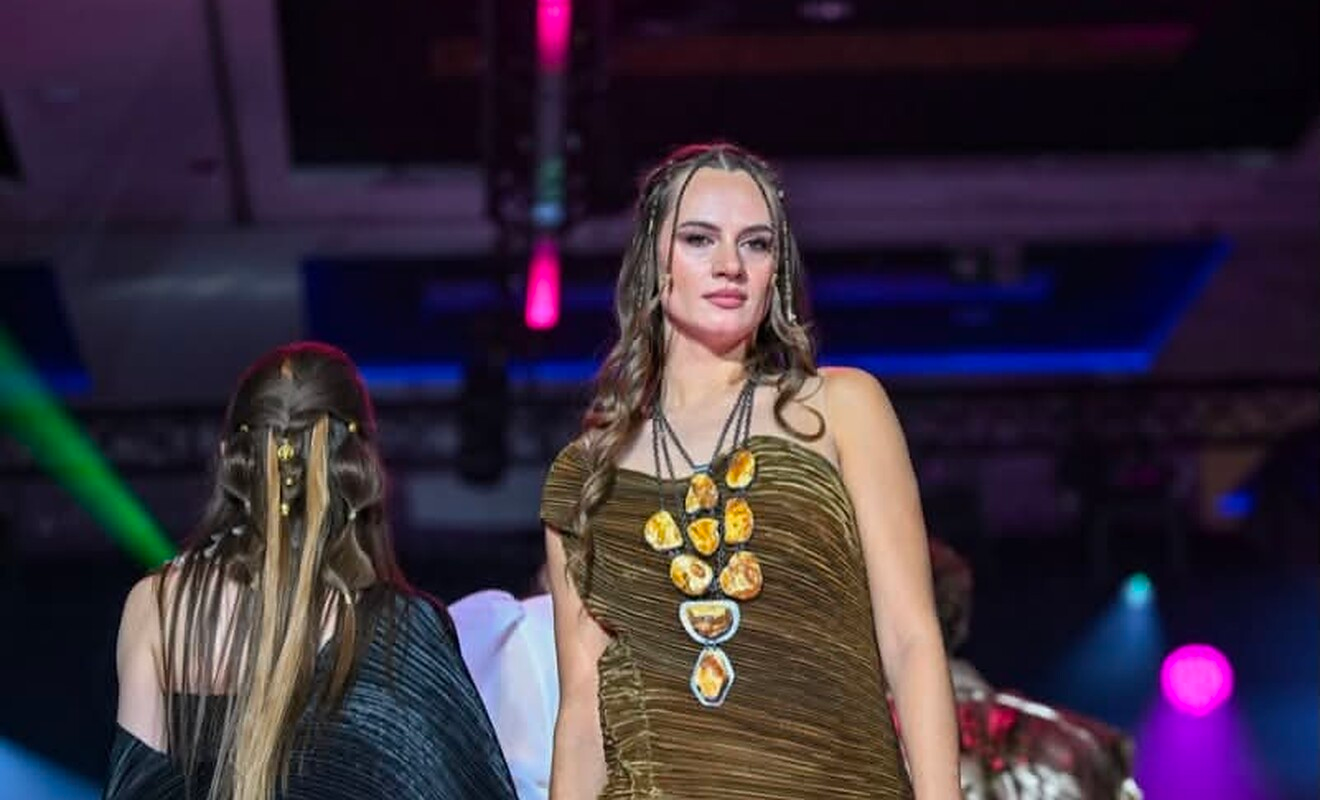
Amber and the Moirai in Zakopane
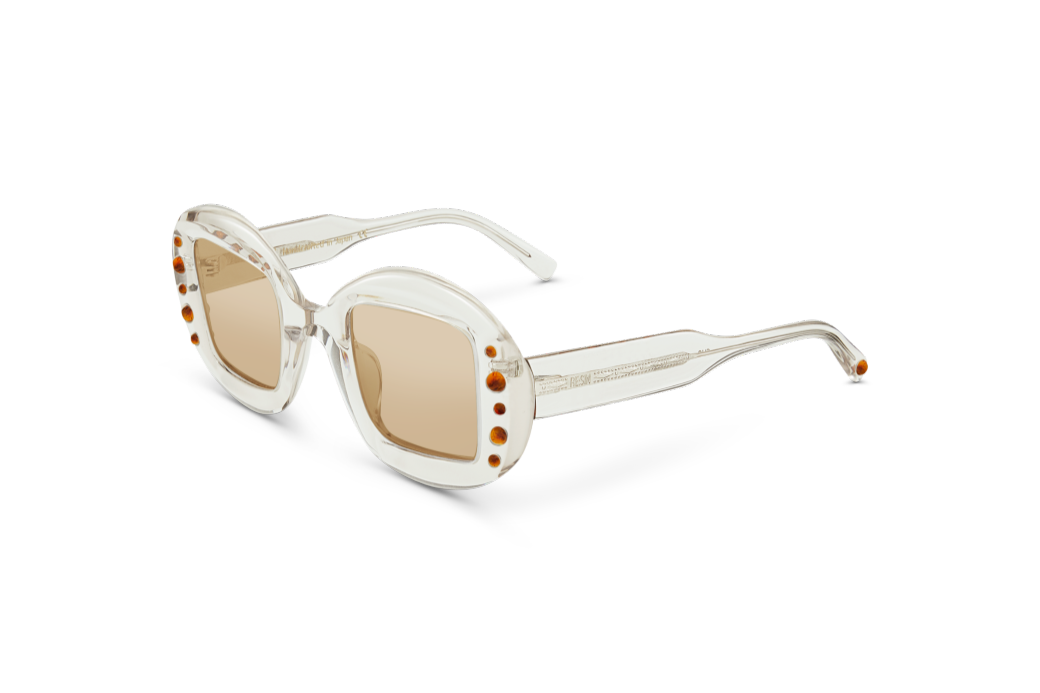
Modern Eyeglass Frames