How Yellow Ambers Led Zofia Chylak to Kurpie
Today we return to the story of “cacka”, “ogniki” and “kościaki”: the names Kurpie amber workers used for amber. But we come back to them through fashion, or more precisely through color. Some beautiful collections begin with big ideas. Others begin with a shade of yellow.
The guiding motif of Zofia Chylak's summer collection was color. Light, yellow, summery. The designer admits that the longer she worked with this shade, the more it reminded her of amber. The palest kind. Milky. Buttery. Luminous. And it was this color that turned her attention to Kurpie and the traditions connected with amber.

Amber was on the list
“In my search for Polish motifs and stories, amber had been on the list for a long time,” says the designer. The sentence seems unremarkable, but it describes well the fate of amber in contemporary fashion. For years it was present and yet somewhat absent. Everyone knew it existed. Few knew what to do with it. As Chylak recalls, in her childhood and youth amber seemed heavy and very old-fashioned. Not in the sense of nobly old. In the other sense. The less attractive one. All the more interesting that she came back to amber. Not to repeat it. To read it anew.

The women of Kurpie Zielone
The starting point was amber necklaces.
The kind worn for generations by the women of Kurpie Zielone (the Green Kurpie). Multi-strand beads falling in cascades and tied with ribbons. They are easy to see in old photographs. Today we look at them as part of folk dress. For the women who owned them, they were part of everyday life. A sign of status. A family keepsake. A reason for pride. It was this way of thinking about amber that interested the designer. Not amber as an ornament. Amber as a story.

Kurpie masters
And then the Konopko couple appear.
Stanisława Konopko and Tadeusz Konopko are among the last people practicing traditional amber processing in Kurpie. They invited the designer so that the newest collection could be photographed in a place connected with this tradition. Such meetings have their own logic. You go to see the amber and shoot the session. You come back with a story about people. The designer recalls, among other things, the smell of amber during polishing. A smell so distinctive that it is hard to mistake for anything else. In the past, the shavings left over from working amber were sometimes used as incense. It is one of those details that stay in the memory for a long time.

Challah, roosters and amber
The result of this search is handmade earrings in the shape of challah loaves. “Kogut” (Rooster) brooches, depicting a rooster from Kazimierz Dolny. Silk scarves hand-finished with amber beads. They are not quotations from the past. They are not a reconstruction. They are rather an attempt at a conversation with tradition.

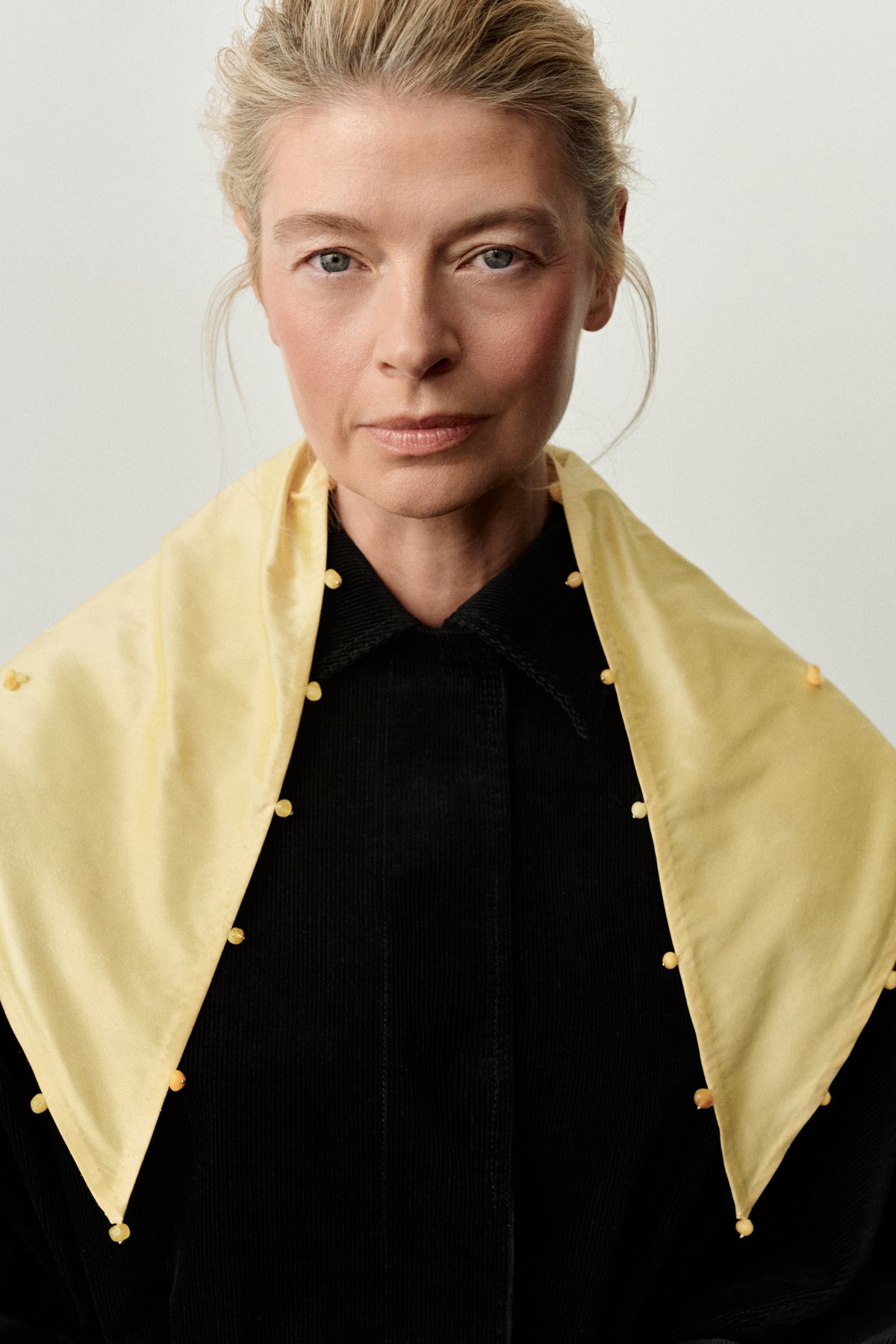
And it all began with color
Zofia Chylak's collection does not recreate a historical Kurpie costume. It is the combination of contemporary fashion and the history of local craft that made Kurpie amber part of a new story. Not as a museum exhibit, but as a source of inspiration for contemporary design.
And perhaps that is exactly why it works. Because it does not try to convince us that the past was more beautiful. It only shows that some things do not lose their meaning.

Colors.
Objects.
Stories.
And sometimes even old words.
Like cacko.
Like kościak.
Like yellow amber.
Prepared on the basis of Zofia Chylak's original materials for the Chylak / Spring Summer 2026 / Amber collection
Photo: CHYLAK
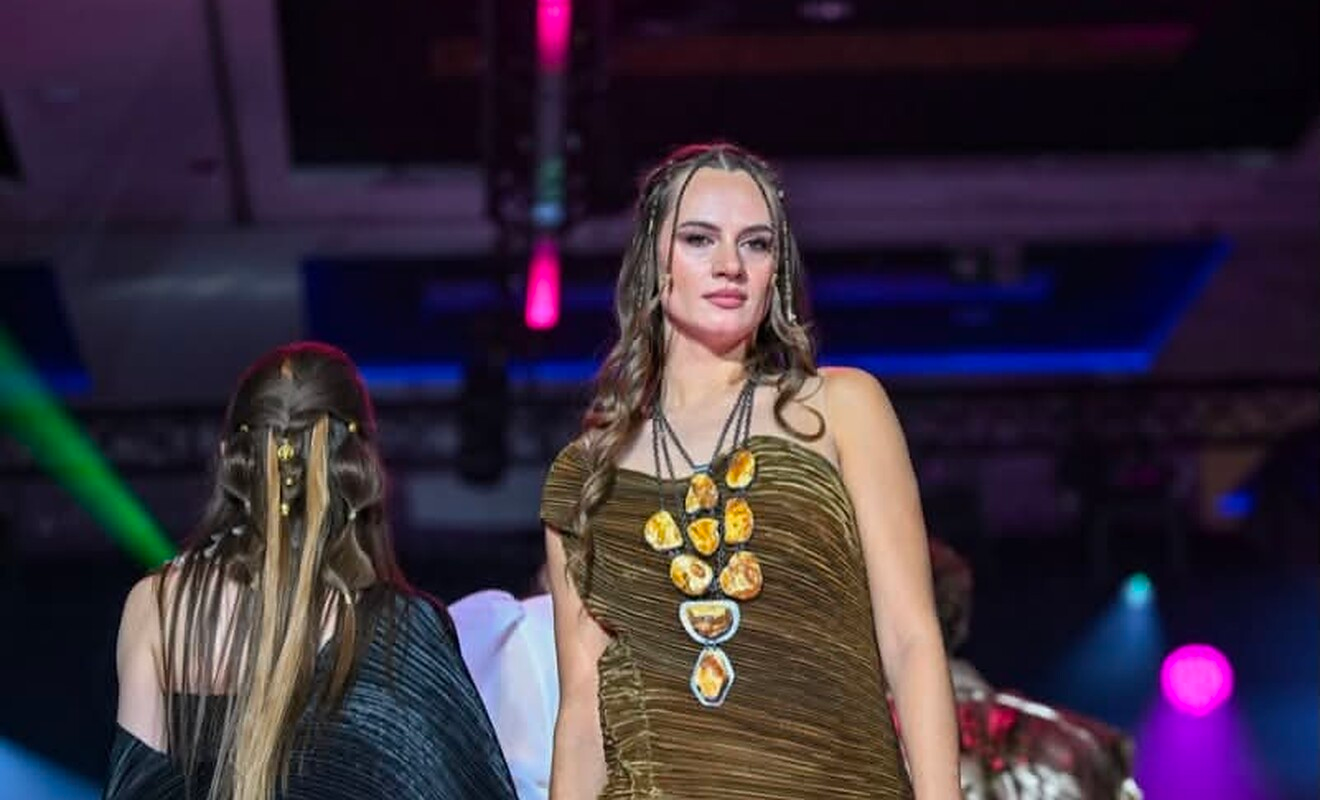
Amber and the Moirai in Zakopane
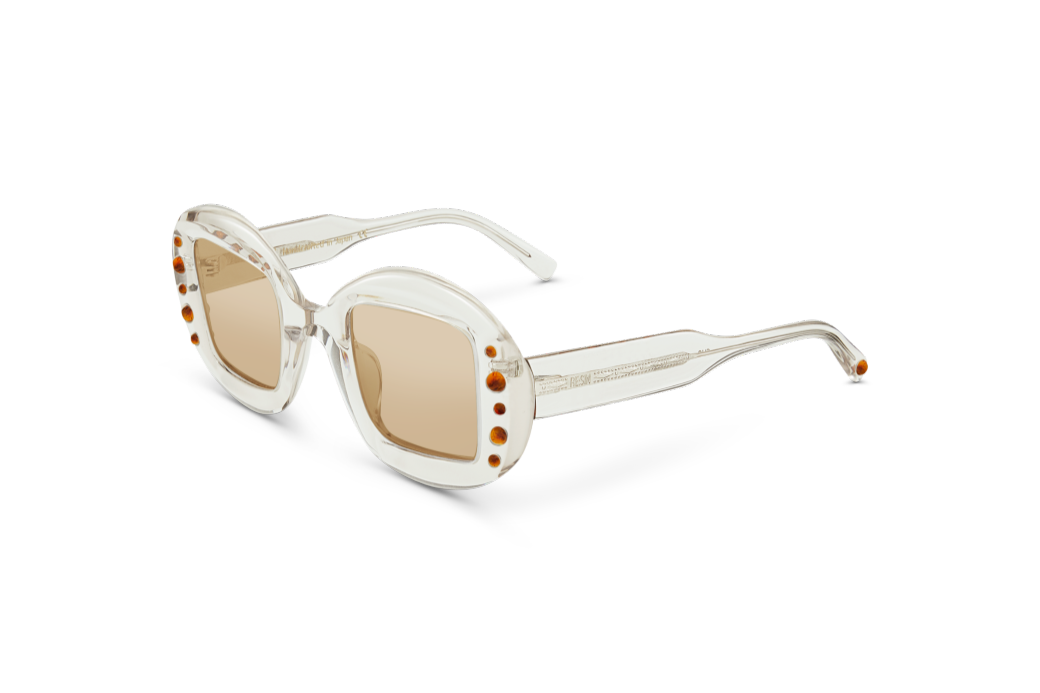
Modern Eyeglass Frames