Cacko, Kościak and Kapuściak: How Amber Was Described in Kurpie in the Past
The amber workers of old Kurpie had their own language for describing amber. They did not speak of milky, transparent or multicolored amber. They said: cacko, kościak, kapuściak or ognik.
Long before amber appeared on runways, entered fashion campaigns and became an inspiration for contemporary designers, it was part of everyday life in Kurpie. It was gathered, worked, sold, and knowledge about it was passed down from generation to generation. Along with this tradition came an exceptionally colorful language describing how amber looks.
Saved from oblivion
It was this world that Adam Chętnik, ethnographer, regionalist and great chronicler of Kurpie, saved from oblivion. In his Mały słownik odmian bursztynu polskiego (Small Dictionary of Polish Amber Varieties) he collected about 80 names used by Kurpie amber workers. They described not only color, but also transparency, structure, degree of weathering and the look of the amber's surface.
When the name said it all
A look through the names recorded by Chętnik is enough to see that the old craftsmen looked at amber differently from today's specialists. They were not interested in microscopic gas bubbles or gemological classifications. They compared amber to things they knew from daily life: honey, fire, cabbage leaves, ivory or marble. The result was a language that was simple, vivid and remarkably accurate.
Cacko. Flawless amber
The most prized pieces were perfectly clear. “Cacko” was the name for completely transparent amber of a light yellow color. When light passed freely through the piece, no further description was needed. It was simply a cacko.
Miodowy. The color of Baltic gold
This is a variety we can easily recognize today as well. Amber of a warm, golden-yellow color resembling fresh honey was simply called miodowy (honey). For many people, this color remains the most characteristic face of Baltic amber.
Ognik. Light trapped in resin
Some ambers draw attention at first glance with their color. “Ognik” was the name for amber with a reddish tint resembling a flame. The name needed no further explanation. One look at the piece was enough to understand where it came from.
Kapuściak. Nature as designer
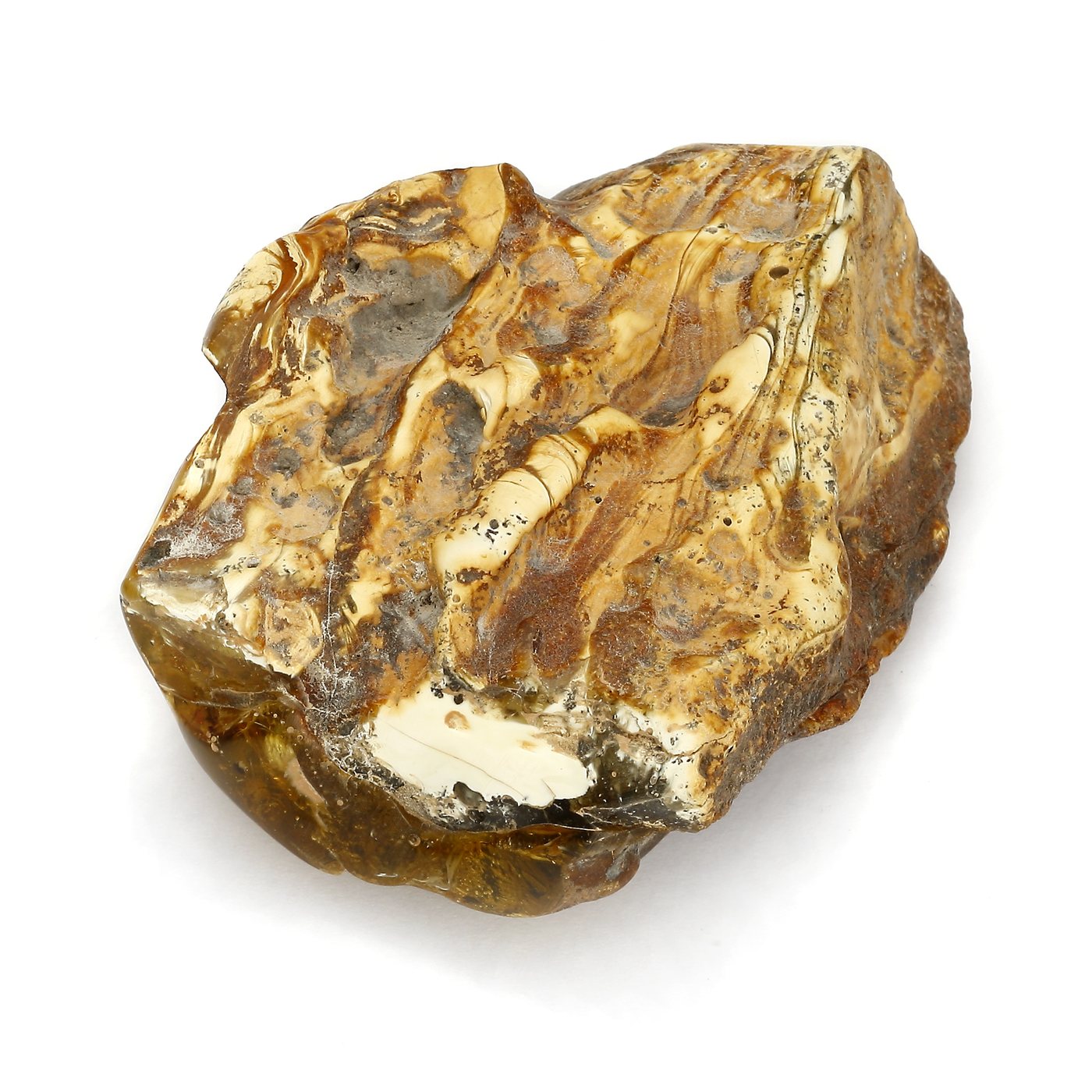
This is probably the most Kurpie name of all. “Kapuściak” described amber in which light streaks on a yellow background resembled the veining of a cabbage leaf. Today's specialists would describe this effect in the language of material structure; the Kurpie amber worker simply saw a cabbage leaf. And called it by its name.
Marmurkowy. Every piece different
Some pieces looked more like an ornamental stone than fossilized resin.
Interwoven shades, streaks and fragments of varying transparency formed patterns resembling marble. Every piece was different, which is why marmurkowy (marbled) amber was among the most decorative varieties.
Kościak. The white gold of Kurpie
Not all amber was golden. “Kościak” was the name for white amber with a delicate yellowish tint resembling ivory. Modern research shows that the white color of ambers in this group is linked to an enormous number of microscopic gas bubbles. For the old amber workers, however, what mattered most was the resemblance to ivory.
Jarzębaty. The beauty of imperfection
The old amber workers did not look for perfection. They could see charm in what was uneven, too. Jarzębaty contained tiny fragments of plant matter, visible as dark points on a light background. It was these traces of a history millions of years long that defined its character.
Zielony. The most mysterious variety
Among the Kurpie names there was also a place for green amber. In the group of “earthy” ambers, which contain admixtures of plant substances, Chętnik also distinguished green amber with its characteristic greenish color. To this day it remains one of the most intriguing varieties of Baltic amber.
More than a dictionary
Today, the names recorded by Adam Chętnik are much more than a catalog of amber varieties; they sound almost like a fragment of a long-forgotten dialect. They record a way of seeing the world. A world in which the craftsman did not separate material from nature. A world in which a pattern on amber resembled a cabbage leaf, a color recalled honey, and a clear piece simply became a cacko.

Kurpie amber: reinterpretations
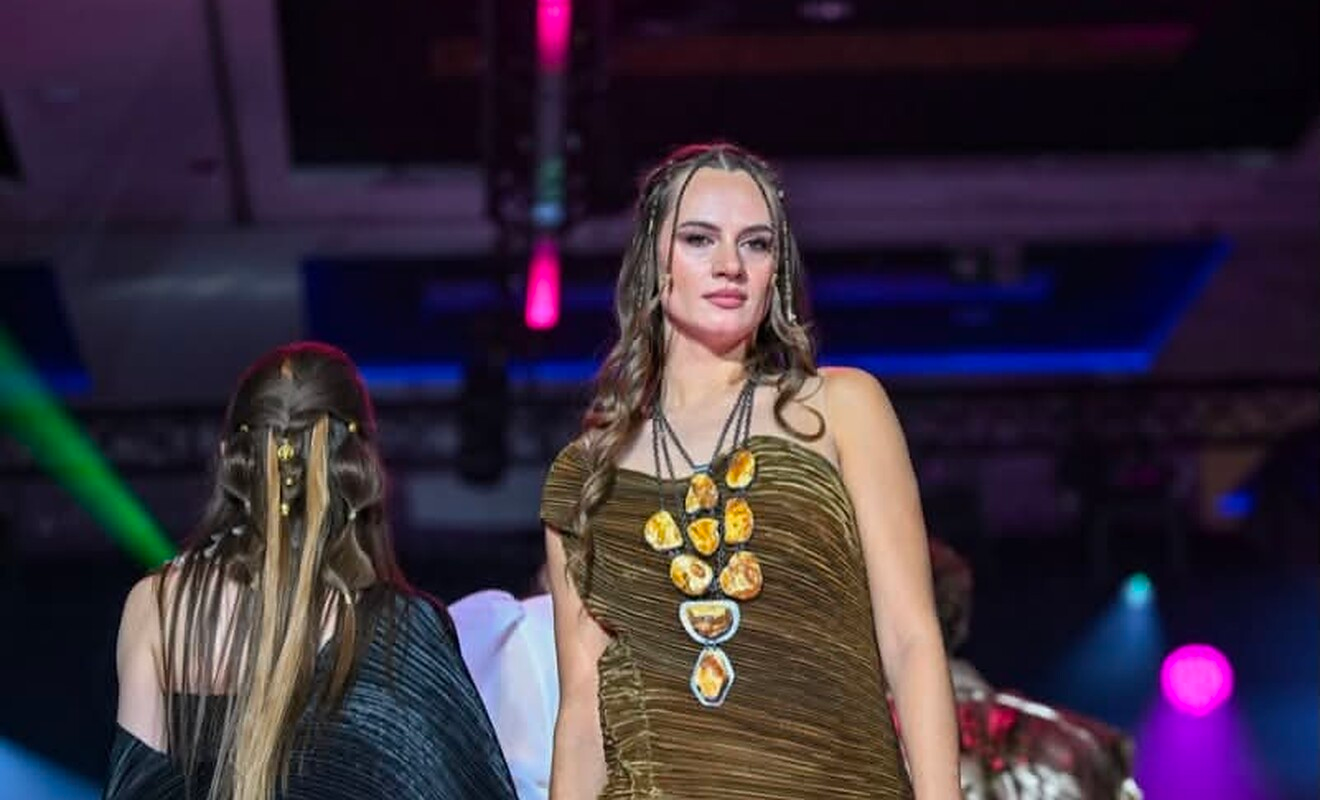
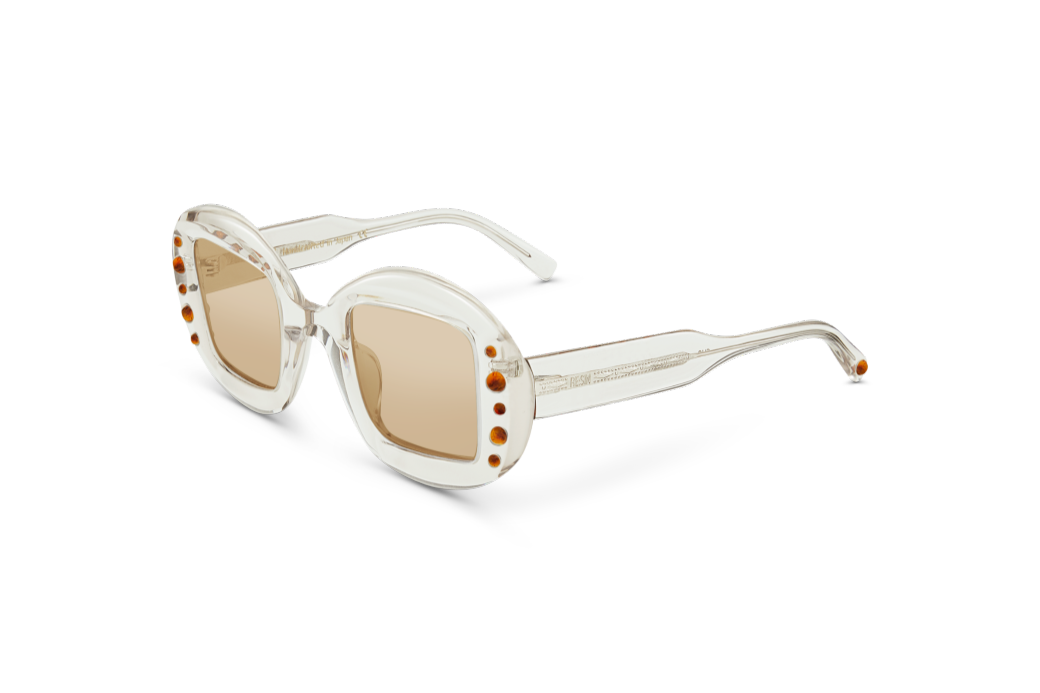
Today, when designers increasingly return to local traditions and craft, these names sound surprisingly contemporary. Because behind each of them lies the memory of a place. And that is exactly why the world of Kurpie amber is returning to design, fashion and contemporary form. In the next article, we will look at how these old inspirations find their place in modern fashion.

Photo: Gdańsk City Hall
Amber and the Moirai in Zakopane
Modern Eyeglass Frames