Amber from the Baltic to Polesine. A story that reconnects Gdańsk and Rovigo
Some stories sound too good to be true. Then the archaeologists arrive, and it turns out that reality is even more interesting than legend.
On the shores of the Baltic, people have been collecting, working, admiring and selling amber for thousands of years. And then, thousands of kilometres away, on the plains between the Adige and the Po, in today’s province of Rovigo, archaeologists find traces of a workshop where, more than three thousand years ago, the same amber was worked by Late Bronze Age craftsmen. Suddenly it turns out that today’s meeting of Gdańsk and Polesine is no new chapter at all. It continues a story that began a very long time ago.
The oldest known amber workshop south of the Baltic
At the archaeological site of Campestrin di Grignano Polesine, the remains of a settlement dated to the 13th-12th century BC were discovered. There might be nothing unusual about that, were it not for the fact that everything an archaeologist hoping to prove the existence of an amber workshop could wish for was found there: chips produced during working, lumps of raw material, unfinished pieces and finished objects. What is more, analyses showed that it was Baltic amber. Researchers now describe Campestrin as the oldest known site in the Mediterranean region with direct evidence of Baltic amber working.
The Italian link of amber Europe
A few kilometres away lies Frattesina, one of the most important Late Bronze Age archaeological sites in Europe. Glass, bronze, ivory and amber were worked there. It was a place of trade, production and the exchange of ideas long before anyone thought of a common market or a European community. For years it was assumed that the routes along which amber travelled from north to south ran through here. The discovery at Campestrin turned those assumptions into facts. Amber did not merely pass through. It was worked here, given shape, and turned from raw material into an object of desire.
Remarkably modern
And there is something remarkably modern about it. At a time when there is so much talk of globalisation, it turns out that three thousand years ago people were already able to build complex networks of exchange, and were curious enough about the world to carry amber across half of Europe.
Gdańsk meets its old reflection
Today Gdańsk is widely recognised as the world capital of amber. This is where AMBERIF, one of the most important events of the amber industry in the world, takes place. This is where amber remains part of the city’s identity, as natural as the sea air, the shipyard cranes or the Gothic walls. That is why cooperation with the Polesine region goes much deeper than an ordinary cultural partnership. It is hard to resist the impression that the two places are finding each other again after a long separation.
On one side, the Baltic, where amber was born. On the other, northern Italy, where that amber found its craftsmen. In between, thousands of years of history.
Protohistoric amber workshops
The organisers of the Sulle Vie dell'Ambra festival point out that the lands between the Adige and the Po have been an important centre for working and trading Baltic amber since the Bronze Age. Official materials even use the term “protostoriche officine dell'ambra”, protohistoric amber workshops, among the oldest known amber-working sites along the Amber Road. The phrase sounds almost poetic, but behind it lie hard science and evidence. Amber chips. Tools. Semi-finished pieces. Laboratory analyses. Dating. And perhaps that is why the story of Gdańsk and Rovigo is so striking. It is not a legend. It is not a beautiful metaphor. It is a fact.
A fact that reminds us that before Europe became a political project, it was a network of human encounters, trade routes and stories. One of those stories was written by amber. And amber, as we know, can last a very long time.
The “Sulle Vie dell'Ambra 2026” festival
This year’s third edition of Sulle Vie dell'Ambra – Ambra, oro del Baltico e del Polesine will take place on 7-15 November 2026 in Rovigo and the Polesine region. Poland is the guest of honour, and the festival is devoted to the historical links between the Baltic coast and northern Italy, shaped by the amber trade since the Bronze Age.
Programme highlights
7 November – festival opening and the debate “Sulle vie dell'Ambra: economia, commerci e imprenditorialità” on the economic and cultural aspects of the ancient Amber Road.
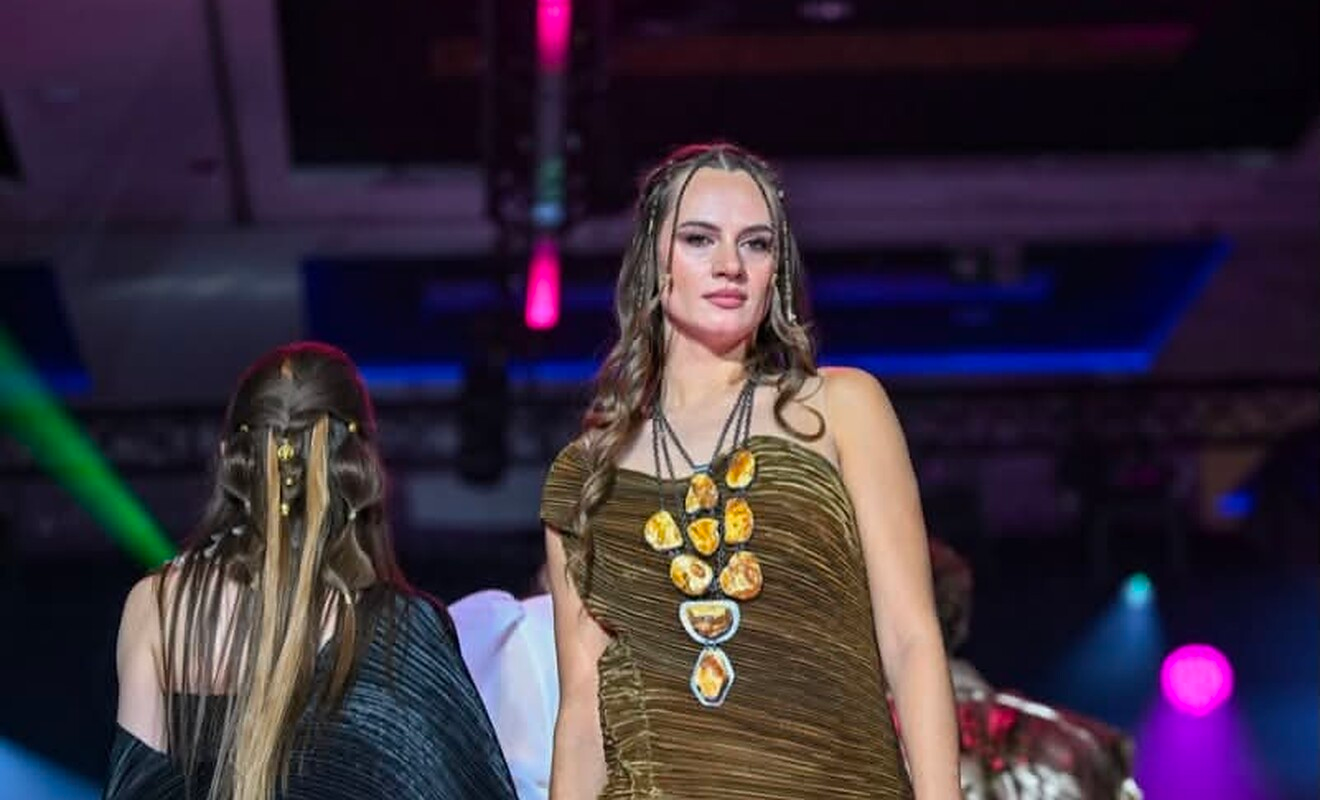
7 November – fashion show by Polish designers Jola Słoma and Mirek Trymbulak.
8 November – Baltic amber working workshops led by Robert Pytlos.
8 November – the meeting “La Fiera AMBERIF e l'ambra baltica” on the AMBERIF fair and the importance of Baltic amber in today’s culture and economy.
Throughout the festival, the Museo dei Grandi Fiumi will show works connected with the Amberif Design Award 2026 competition and a reconstruction of the famous Amber Room.
The programme also includes an international scientific conference on research into prehistoric amber in Europe, concerts, performances, exhibitions and events devoted to the old pilgrimage and trade routes linking Northern Europe with the Adriatic.
Amber and the Moirai in Zakopane
Modern Eyeglass Frames